(NO! Of course not.)
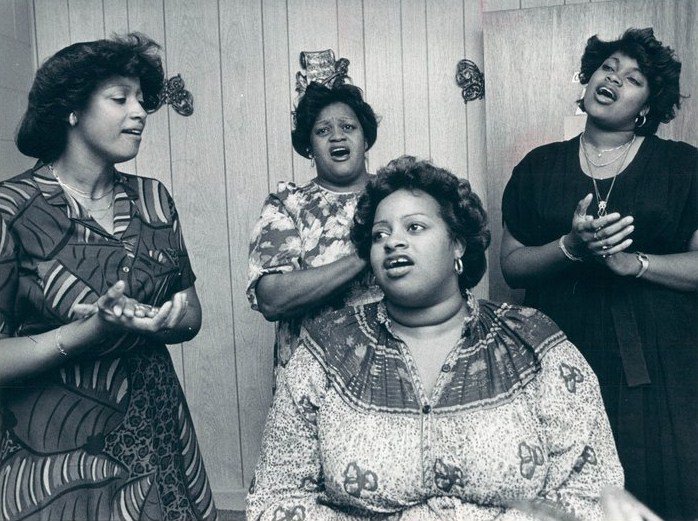
A reference to gospel super group The Clark Sisters’, Is my living in vain?
The title of this week’s session was: Can governance advisors and development organizations learn to think and work politically?
So in other words, my (perhaps selfish) re-interpretation of the question was: after dedicating time to studying development theory and politics, will the knowledge that I’ve gained be in vain if it doesn’t gain traction in practice? This is the question that informs my thoughts in this final blog post.
‘Under pressure’: Everyday Politics, Power and Working politically
Looking first at the particular TWP-oriented framework examined this week, the session, led by Dr David Hudson, focused in part, on the Everyday Political Analysis Framework created by him and others, to enable (busy) development workers and organisations to quickly understand political contexts and apply this understanding for effective development intervention outcomes. This is achieved through a 2-step analysis identifying, interests and the differing abilities of different actors to effect change.
Working politically in practice has, I think, come to the fore more explicitly during the last few sessions on this module. But what particularly liked about this week’s framework was the focus on the networks and relations in which people are engaged, and how this affects interests of key actors– or as put by the authors of the framework: “The important thing is to understand their context – the pressures they face from others and the rules within which they have to work.”
So in other words, the key, as promoted by this framework, in using TWP to achieve effective outcomes, is to identify who holds the power in the given context and how you can get these people to cooperate with you. The reason that highlighting the interests of the powerful and the ‘PRESSURE’ coming from the wider network in which they are part became to me, crucial, was for how this form of understanding allows for a nuanced perspective of where power and more significantly, the ability to turn such power into influence lies and with whom that ability lies.
Looking back at sessions 2 and 8 relating to political settlements, session 2 characterised former armed militants in the DRC as power-holders because of their ability to upset the settlement through violence; for reasons like this Rocha Menochal emphasised the need to include such actors in initial political settlements. The example of the militants highlights what I feel that his framework importantly, enables us to see: that the most crucial actors to engage with may differ from expectation. In this way, we can see and understand specific dynamics of power, including the softer or informal power dynamics and appreciate how crucial they are.
That’s great, but how do we do this in practice?
The million dollar question: creating these frameworks is great and everything, but if you can’t get people and organisations to use them, of what use are they?
Clearly this question, relating to the gulf between policy and practice, continues to be a source of turmoil in the development academic, policy and practice spheres. I don’t, in my 6 months of having studied international development, propose to provide the answer in this blog post.
But here’s a thought: ironically, here, it seems that frameworks such as EPA can be the answer to their own question. After all, as highlighted by Hudson during the lecture, political analysis is relevant every day, everywhere, in most contexts that you can think of.
During the session another classmate, recounted his experience of learning to work/ think politically due to a manager who had essentially forced this approach on him. It forced him to change his way of doing things but also resulted in him changing his way of thinking and practice intuitively as he was able to see the benefits. As a result he gained better project outcomes than counterparts who had not been made to develop these particular sensibilities. Assessing the situation à la EPA, this course-mates interest or need was to keep his job and perform well. Pressure, which could be applied by his superior who had power and influence where his interests lay was leveraged to create a consequent change in their bubble of work-place culture.
As suggested by Alina Rocha Menochal, development professionals need to learn to think politically with an environment encouraging adaptation, flexibility and the ability to learn by doing. Perhaps this can be acheived, even if, somewhat counter-intuitively it has to be enforced initially.
And wrapping up…..
As highlighted in a previous blog post, I’ve truly gained a renewed sense of value for the asset that my social science background has given me in terms of teaching me to think politically. As Dr Alina Rocha Menochal analogised it’s like starting a new language from scratch. But from what I’ve seen over the course of this module, it’s a necessary language, or as I like to think of it, a muscle that needs to be worked, strengthened and applied in order to ‘do’ development properly.
References
- Hudson, D., Marquette, H., Waldock, S. (2016) Everyday Political Analysis, Development Leadership Programme [pdf online]. Available at: file:///G:/ID-DevPol/EPA.pdf
- Rocha Menochal, A (2014) “Parlez-vous politics?” Or why working politically is like learning a language Oxfam From Poverty to Power blog. [Online]. Available at: http://oxfamblogs.org/fp2p/parlez-vous-politics-or-why-working-politically-is-like-learning-a-language/
 The Narrator's Pen